Tuesday, 27 October 2009

All You Want to Know About Breast Cancer

The particular part of the breast where a cancer originates categorizes that type of breast cancer
*Ductal Carcinoma: The beginnings of this type of cancer is in the cells which line the ducts of the breast, the ducts that supply milk to the nipple; just underneath the nipple and the areola. If the cancer is in situ, that is, it is contained and not invasive out it is called Ductal Carcinoma IN Situ (DCIS). Treatment of such a type of cancer is largely successful and can be typically removed by a lumpectomy. In case the margins of the tumor are devoid of cancer, radiation might be a form of follow-up treatment. If it has become invasive – spread into nearby tissue a mastectomy may be required coupled with chemotherapy.
*Lobular Carcinoma: This variety of breast cancer, as it is named, starts at the lobes (glands) that are located under the ducts far more deeper inside the breasts. These lobes produce milk. If the cancer has not spread and is contained, then it is called Lobular Carcinoma In Situ (LCIS). Depending on whether the cancer is contained or has spread, either lumpectomy perhaps followed by radiation or mastectomy followed by chemotherapy may be the line of treatment.
The next common type of breast cancer are those that have invaded adjacent tissue. They include:
*Invasive (Infiltrating) Cancer of the Breast : These are the cancers that have the potential to spread out from the site of the original tumor and infiltrate into the whole of the breast or even into other parts of the body. Invasive breast cancer come in several different types and subtypes.
*Inflammatory Breast Cancer: A very rare kind of breast cancer but a very aggressive kind. Instead of the typical form of other breast cancers that appear in the form of lumps, this variety takes the form or sheets or nests. It can appear under the skin or in the skin. Unlike the above mentioned two types of cancers, this kind is first treated with chemotherapy followed by surgery. If the cancer id detected early, then the prognosis is good and the rate of survival is gradually increasing.
*Paget’s Disease: This type of breast cancer was discovered by Sir James Paget and is so named after him. He was the one who noticed the relationship between the physiological changes of the nipple and the underlying cancer. Typically, the cancer has the appearance of a skin rash or an eczema on the nipple or there is a hardening of the nipple. There may be accompanying itchiness. This itchiness and the dislodging of scabs when scratched are the symptoms of the breast cancer festering under the skin.

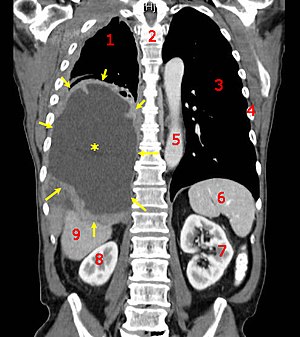
Mesothelioma – The Tests Used For Diagnosis

Cancer is a word that will scare even the bravest of folks. Mesothelioma is a form of cancer that is associated with asbestos exposure and is, fortunately, fairly rare. In this article, we take a look at the tests used for diagnosing it.
Unless you like reading Grey’s Anatomy, you probably aren’t aware of the significance of the name of this cancer. Mesothelioma refers to a cancer of the Mesothelium. Huh? The Mesothelium is a lining that surrounds the chest and abdomen cavities as well as the organs. There is a lubricant in the lining that allows the organs to move about without injury. Mesothelioma is a cancerous growth in this lining.
Testing for Mesothelioma is fairly difficult. The cancer can take 15 to 40 years to manifest after exposure to asbestos. The preliminary test is nothing more than the chest x-ray you get with your yearly checkup. The x-ray can reveal abnormal growths. It rarely conclusively shows Mesothelioma, but does give the physician a heads up that further investigation is needed.
The next test used to diagnose the condition is a Cytology test. This is done by taking out fluid in the Mesothelium lining. It is then analyze in a lab in an effort to determine if any malignant cells are present. This test is starting to be used less often by physicians. Why? It is notoriously inaccurate!
Now we start getting to the serious tests. The first is known as a needle biopsy. In this test, a needle will be inserted into what appears to be the area of concern. A small amount of material is then removed and sent to the lab for analysis. This is a direct test of the area in question and usually reveals conclusively what is going on. If the area in question is not readily available to a needle, the biopsy may be done as a full surgery where the area is opened up and a sample is taken.
One of the things people constantly complain about when it comes to cancer diagnosis is the lack of a definitive answer. Every test suggests something, but few definitely indicate anything. The same frustration holds true for Mesothelioma. Until you have a biopsy done, you’ll never really know if you have this form of cancer.

Amino acids and Kwashiorkor

Kwashiorkor results from prolonged insufficient essential amino acids such as lysine and tryptophan in the diet and greater digestion of carbohydrates. It is a disease associated with underdeveloped third world countries. Young children in areas affected by famine are most at risk. Children continue to grow at a nearly normal rate.Their adipose tissue reserves are decreased as their fat is metabolized. The characteristic symptoms of kwashiorkor are swelling of the abdomen, muscle wasting, hair loss and skin sores.

This condition can be rapidly reserved when the protein component of the diet is improved.

6 Mistakes beginners do on their diet!

A diet to gain weight is a targeted to muscle building diet. You should be gaining weight while losing fat. It’s interesting to point out something that leads us to the first mistake most people do: a diet to gain weight is different from a diet to keep your weight.

The 6 Top Mistakes Beginners Bodybuilders Do And How To Not Make Them

  1. The first and most common mistake beginners make is thinking that they shouldn’t change their diet. They keep with a weight keeping diet instead of getting a diet to gain weight. So, to avoid that, you should seek muscle building diets.
  2. Not eating enough protein. Some people just don’t understand that what is going to make them full of muscles is proteins. One’s muscles are built from proteins – not fat, not carbohydrates, not vitamins. So, you should be eating foods that contains more proteins. Examples are chicken, red meat and fish.
  3. Vitamins are not going to be used as “raw-material” to build your muscles, but it can speed up the process. The two main vitamins for bodybuilders are B and B2. Those will not make your muscles grow healthier, but it’ll make your body uses better the energy it has. Both of those vitamins can be found on eggs, nuts and milk. You can find B-vitamin also in oats, peas, carrots, cheese and grapes. And B2-vitamin can be found also in milk, meat, peanuts and green vegetables.
  4. Not scheduling their day so that they can eat before going workout. This is very important, and it made a huge difference for me when I started doing it. You should eat somewhere between 45 minutes to one hour before going workout. And this meal should have a little more carbohydrates than the normal. That is going to give your body energy to do the “heavy work”.
  5. Not eating after the workout. After the workout, your body is almost with no energy. And the process of resting is starting. You want to start it well, so you should eat something that will give your body just the enough amount of energy to this. The ideal is to eat fruits here, a apples, banana, pear, …
  6. Another mistake is ONLY WORRYING ABOUT DIET. Oh, this is a huge one. Some people actually think that the diet alone will give then muscles. A diet like this one alone will give you fat. You should be working out and spending the amount of energy you have gotten. Also to stimulate the process of muscle building